
Hobs and extraction

The choice of hob is determined by your fuel preference. Gas is popular for its visible flame and its controllability but mains gas is not available in all areas. Electric ceramic hobs have a glass surface that is easy to clean, while ceramic hobs with a halogen heat source come close to gas in responsiveness. Avoid using cast-iron pans on ceramic hobs as they can scratch. Induction hobs are considered superior in speed and energy efficiency, but are more expensive and only work with certain pans.

Hob configuration:
The most popular hob layout is a four-burner (or zone on a ceramic hob), 60cm—wide model, but you can also get a 70cm-wide gas hob with an additional central wok burner that fits into a 60cm gap — letting you upgrade without buying new worktops. Wider 80cm and 90cm hobs tend to be narrow so you are not reaching over hot pans to those at the back. Domino hobs are named after their distinctive shape and allow you to create a cooking hub made up of small sections of gas, induction, griddles, barbecues, steamers and deep-fat fryers. You can also add a domino next to your main hob, such as a gas wok burner alongside an induction hob.

Keeping air clean:
Thanks to the advent of powerful perimetric extraction (based on the Venturi principle, air is sucked around the full perimeter of the fan, producing faster results at slower, quieter speeds), today’s hoods do not have to hover over the hob, The new wall hugging models are popular; there are also island hoods that look good from all angles. Extendable chim neys work well with high ceilings and down-draught extraction is a great modern choice. Installed at a low level next to the hob, it pulls odours downwards, venting out under the floorboards. Recessed hoods that fit flush to the ceiling are a neat solution, too – try Atag or ABK Innovent. lf you opt for quiet models operating at less than 55 decibels they won’t impinge on normal levels of conversation.

Posted in Kitchen feature | Tagged | Comments Off

Stand alone or built in

One of the first decisions to make is the format of your oven – built-in with a separate hob or free-standing? Freestanding models such as a range cooker are popular for coun- try and classic kitchens, but even these traditional options have been updated with pyrolytic cleaning, multi-function programming and induction hobs. On the other hand, built-in ovens offer great flexibility in terms of location, and a sleeker profile to suit modern fitted cabinets. However, built-in models designed for eye-level or in-column installation are too tall for under-counter use; if you want this configuration with a hob positioned above, go for a “built-under” model.

The right format:
Stand-alone cookers and built-in ovens both vary dramatically in price, depending on the brand and the complexity of features. A range cooker may seem like a large initial outlay but there are additional costs associated with built-in ovens with elements such as cabinet housings and a separate hob.

Size and position:
Freestanding cookers range from between 50 to 150cm wide, and manufacturers advise a gap of at least Sem around the appliance to prevent heat damage to cabinets. The most popular built-in ovens are 60cm wide (though you can also get 90cm pizza ovens). Heights differ, from 45cm-high “compact” models to 90cm high double ovens. Positioning at eye level is probably the ideal, and creating “banks” of matching single ovens, combi-ovens and microwaves is a popular trend. Some heat store range cookers also provide central heating and hot water, with no need of a separate boiler. Beware of models that use the same burner for cooker and water if you turn the heating off in the summer you’re likely to lose cooking facilities. For an eco-friendly option, take a look at Wamsler’s woodburninq range cooker with he-nrinc

Special features:
Versatile space Single ovens with two independently controlled cavities (try Samsung’s Dual Cook and Atag’s D621lK) allow you to cook two dishes simultaneously at different temperatures and without odour transference. Rangemaster’s Professional + FX range cooker has a removable divider panel that reoluces oven capacity from 108 litres to 49 litres for smaller dishes.
Easy-clean Ovens with pyrolytic cleaning turn spillages to ash at high temperatures (500°C), so you never again have to clean the oven manually. Catalytic liners carbonise spillages during high-temperature cooking and are more eco-friendly, but cleaning only applies to the areas covereol by liners (usually the sides). Also consider models with aqua-clean programmes, which use water on the bottom of the oven to steam-clean.
Speedy cooking Ovens with a rapid heat-up function, either built-in automatically or activated manually, use the top and bottom heat plus fan to bring the oven up to 180°C in just five to six minutes.

Posted in Kitchen feature | Tagged | Comments Off

Cooking appliances

recognition within a generation, fuelled as much by demand as by the technology that is available, The most obvious thing is that even the simplest equipment is beautiful. “Entry level” used to be a polite term for ugly; now it is used to describe the most basic model in a series, and you can bet it will still look good.

Co-ordination has also become a big factor, Where we used to buy one oven, we can now have a separate steam oven, combi-microwave and warming drawer, all matching to create a sleek bank of appliances. As functionality becomes refined, appliances become easier to use, too, For example, intelligent ovens use moisture and oxygen sensors to monitor and adjust the settings during cooking, producing professional results with minimal interference.
“Sensor cooking is particularly helpful to cooks who struggle with baking,” says Clare Kelly, assistant training manager at Miele’s new Experience Centre in London. “As a cake bakes, the oxygen levels in the oven change so, by monitoring the oxygen, the oven knows exactly when the cake is done.”

Many ovens now have built—in programmable recipes for one-touch cooking; some even prompt you when to add further dishes to create a complete meal. On hobs, induction continues to impress for speed and low—energy consumption, while extractors are simply quieter and more efficient. Even if you are not planning to change your kitchen completely, upgrading appliances will transform the way it works.

Posted in Kitchen feature | Tagged | Comments Off

Bedroom designer secrets

With this bedroom John Stefanidis wanted to accentuate the saturated colours and simple style of classic Greek interiors. To ensure that it remains fresh, cool and elegant during the Mediterranean summers, John has employed the classic mix of blue and white, which is ideal for houses by the sea. Simple white furniture and linen punctuate the scheme, while deep blue walls, lamp bases fashioned from Venini blue glass vases and patterned textiles add depth. The slatted frieze around the top of the walls echoes the trellis shutters found on many traditional Greek island homes and provides a discreet yet decorative way to hide the air conditioning.

Mindful of the room’s small proportions, John has successfully used strong colour, classic furniture and intricate details, creating a luminous and elegant space that is perfectly in tune with its surroundings. Positioned to lighten and add symmetry to the scheme, lyre-shaped mirrors inspired by delicate Russian designs flank the bed. By dressing the four-poster bed with heavy linen curtains it was possible to leave the windows bare, maximising the amount of daylight entenng and making the most of the view.

Posted in Uncategorized | Tagged | Comments Off

An interview with Nina Moeller

DESCRIBE THE ORIGINAL SPACE
It was an extension built on top of a flat roof area over the entrance to Isabel and Robert Wi|son’s Victorian home in Chelsea. They wanted extra bathroom facilities for their two daughters, so architect Mark Hillier created this long extension to be used as a shower room.

WHAT WAS THE CLIENTS’ BRIEF?
Thankfully, they understood a bath was out of the question but wanted the slim room to look as spacious as possible and to use beautiful materials. Mark specified a large skylight at one end, which floods the space with light, and there was already a small window at the other end sol was lucky in terms of light, if not space.

HOW DID YOU PLAN THE LAYOUT?
The position of both the window and the skylight determined the layout; it made sense to have the shower under the skylight where the girls can enjoy sunshine in the morning or starry skies at night. The loo sits under the small window opposite, leaving space for a narrow-depth trough basin on one side, with adequate room to manoeuvre.

WHAT MATERIALS DID YOU CHOOSE?
l believe it is important to limit the themes under one roof. Limestone has been used in the main en-suite
bathroom, which Isabel loves and, as I like to keep things simple, l decided to explore other ways to use the material in the shower room. We chose rough-hewn limestone for part of the walls, polished limestone for the floor and basin, and polished plaster on two sides of the shower area. The latter was completed by an excellent specialist plasterer and looks very much like limestone but provides a seamless finish.

WHAT WAS YOUR MAIN CHALLENGE?
Achieving the right proportions was key to making this space work and it does pay to take care of the smallest details. For example, there are eight uniformly sized slabs of limestone running the length of the floor. Half or quarter tiles would have been instantly noticeable, so the measurements had to be precise.

WHAT ABOUT THE DESIGN’S FINISHING TOUCHES?
The Lutron lighting system definitely plays an important part in this scheme, as it allows for the creation of different mood settings by day and night. The downlights on the walls are particularly effective as they highlight the texture of the limestone and bring it to life.

ARE THERE ANY ADDITIONAL FAVOURITE FEATURES?
Isabel felt that a heated towel rail would have been a visual distraction here and that in such a narrow space it may have been too imposing. instead, we heated a section of the wall using underfloor heating pads behind the plaster, and the towels now hang to dry from discreet stainless-steel pegs.

HOW EASY IS IT TO MAINTAIN?
Since everything in the room is fully tanked, all surfaces are mop friendly and there is nowhere to harbour dust. The edges of the limestone tiles were all pre-sealed prior to installation, after which an additional three coats of sealer were applied in situ. And, one year after fitting, the finish is still in pristine condition.

WHAT IS THE KEY TO THIS BATHROOM’S SUCCESS?
My vision for this narrow space was to create an aesthetically pleasing solution, giving it a feeling of generosity. By exploring the use of limestone and its different textures and finishes, we have created an overall look that combines
simplicity and functionality.

Posted in Kitchen feature | Tagged | Comments Off

Classic revival for a kitchen

Having lived with plain maple units in her new-build Surrey home for five years, interior designer Helen Bygraves wanted a change and she chose to make it a dramatic one. “Kitchens are becoming more intimate and I found myself entertaining more and more in the kitchen,” she explains. “l enjoy socialising with guests as I cook, but I wanted the environment to be more glamorous.” The original kitchen was well made and laid out, so Helenjust gave it a facelift, spraying the cabinet doors with a dark wenge stain, which allows the grain of the maple to show through, and adding faux shagreen panels to the cabinet doors. The black granite worktops stayed but beige tile splashbacks were swapped for striking black glass.

Helen added a compact island unit with the help of a carpenter, using doors from the original kitchen supplier plus more granite. “l installed a beverage fridge in the back of the island, and had wine racks built either side but, from the living room, it looks like a solid block of furniture with bar stools,” she says. Swarovski crystal downlights add sparkle, reflected in stainless-steel appliances and utensils, and the area opens into a conservatory where the formal dining table sits. “The doors to it are always left open and the whole space is now a very sociable area, which comes to life at night”

Posted in Kitchen feature | Tagged | Comments Off

Tall order for a kitchen

Architects Carolyn Trevor and Patrick Lahiff used their professional skills to remodel their Cambervvell home, moving the kitchen from the basement to the airier ground floor. The new room is blessed with high ceilings, so Carolyn has used the height to create maximum storage while retaining access to the garden via a bridge with a glass balustrade. Leaving the kitchen open to a spacious family/reception room at the front of the house provides a large light-filled entertaining space with huge windows at either end.

As the couple have five children, even weekday meals benefit from a sizeable dining table. “We often have friends to dinner during the week and at weekends, so there are usually eight or ten children at a time in the house,” Carolyn says, “And now at last, we have a table that can sit 14. lt’s by Monica Armani and has wheels so that you can drive it around,” she adds. During larger parties, Carolyn wheels the table to the front reception room where it sits neatly over the low-backed sofa in the bay window to free up yet more floor space.

Although the core of the kitchen features inexpensive gloss white cabinets by Hacker, Carolyn has incorporated luxury touches such as Calacatta marble splashbacks and contemporary stainless steel worktops with seamless integrated sinks. Additional statement pieces include the iconic Taraxacum 88 pendants by Achille Castiglioni for Elos and Charles Eames Eiffel dining chairs. “Combined with the beautiful ornate cornicing, high ceilings and direct access to the garden, it’s a great space. Several of our friends who live in flats that are too small for big dinner parties now hold them in our kitchen  Carolyn reveals.

Posted in Kitchen feature | Tagged | Comments Off

Open house for a new kitchen

Family life has been transformed for the I-lamiltons in their 1930s north London home thanks to a new full-width extension with floor-to-ceiling folding doors. “We definitely entertain a lot more now,” says Suzanne, who
lives with husband Derren and their young daughters, Lola and Ruby. “We have a lot of relatives and our home has become the meeting point for family gatherings.” Originally the space was a confusion of smaller rooms, including an outside WC, but with the help of Urban Solutions the kitchen has been consolidated and extended into the garden. Kitchen designer Neil Lerner then created a streamlined, handle-free kitchen using Antique White lacquered cabinets, topped with Glacier White Corian.

The kitchen is packed with all the latest appliances, but the built—in coffee machine by Miele and Quooker hot water tap that make cooking en masse a breeze are the two that Suzanne prizes the most. “Both were expensive but well worth it,” she explains, “especially when there are lots of people to cater for.” Retro elements such as the Edon chrome pendant lights and Bombo bar stools, plus curvaceous Verner Panton dining chairs lend personality, while bespoke sofas in Suzanne’s current favourite shade, aubergine, add a splash of colour to the living area. This kitchen comes into its own in the summer when, on fine days, the aluminium framed folding doors are pushed right back, effectively doubling the space. “l love the scale ofit,” Suzanne says. “There’s so much more room to cook, entertain and socialise.”

Posted in Kitchen feature | Tagged | Comments Off

The bathroom en-suite

The pressures on a family bathroom, particularly at peak times like the morning rush hour, can be considerable. ln such circumstances, it would be a rare family that wouldnt welcome the addition of an extra bathroom. A bedroom with an en suite bathroom also adds a touch of luxury: it’s good to be able to pamper yourself with your very own facilities, close to dressing and sleeping areas, and to enjoy the privacy of being able to move from one area to another without the bother of putting on clothes and a public face:

Planning ahead installing a bathroom involves expense, but it should add value to your house unless you have to lose a bedroom in the process. In a large home, with bedrooms surplus to normal family needs, replacing a small bedroom with an extra bathroom might well enhance the desirability of the property, as well as being of beneht to the current occupants. Otherwise it may be a better investment to spend a little more in the first place to achieve the optimum compromise of bedroom and bathroom.

To avoid losing a bedroom, consider moving a shared wall to take space from two adjoining bedrooms. lf you have to reconcile yourself to positioning the new bathroom completely within your bedroom, there are several ingenious systems that ·provide bathroom facilities for tiny areas. Even a simple shower cubicle in a bedroom corner will help relieve the morning queue. It’s important to get advice from a qualifed plumber from the outset. To keep down costs, make use of existing plumbing as far as you are able. Plumbing additions or alterations must comply with water by-laws, and changes to the waste system have to conform to building regulations: your local authority will be able to advise.

Posted in Bathroom feature | Tagged | Comments Off

Around the handbasin

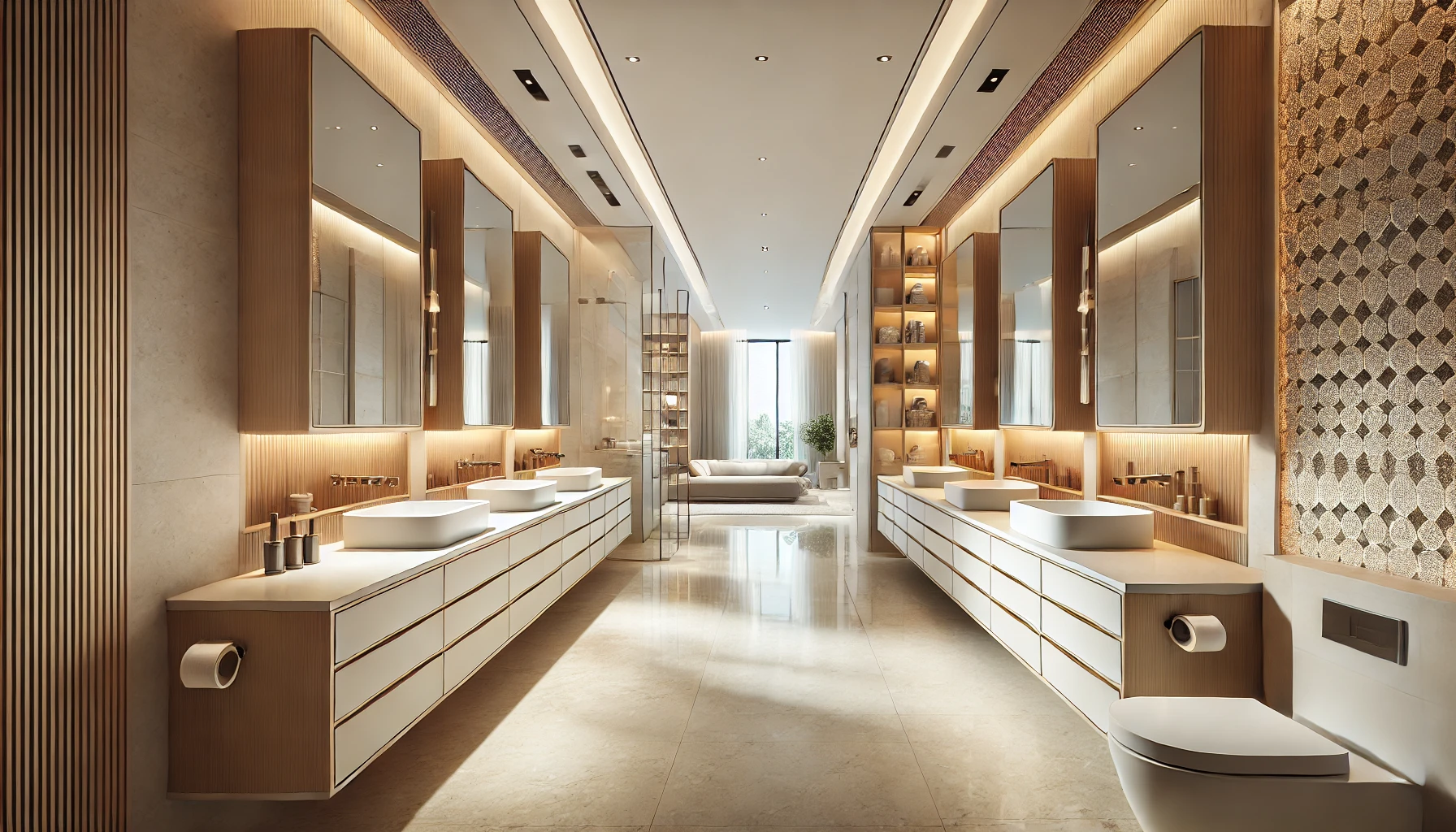
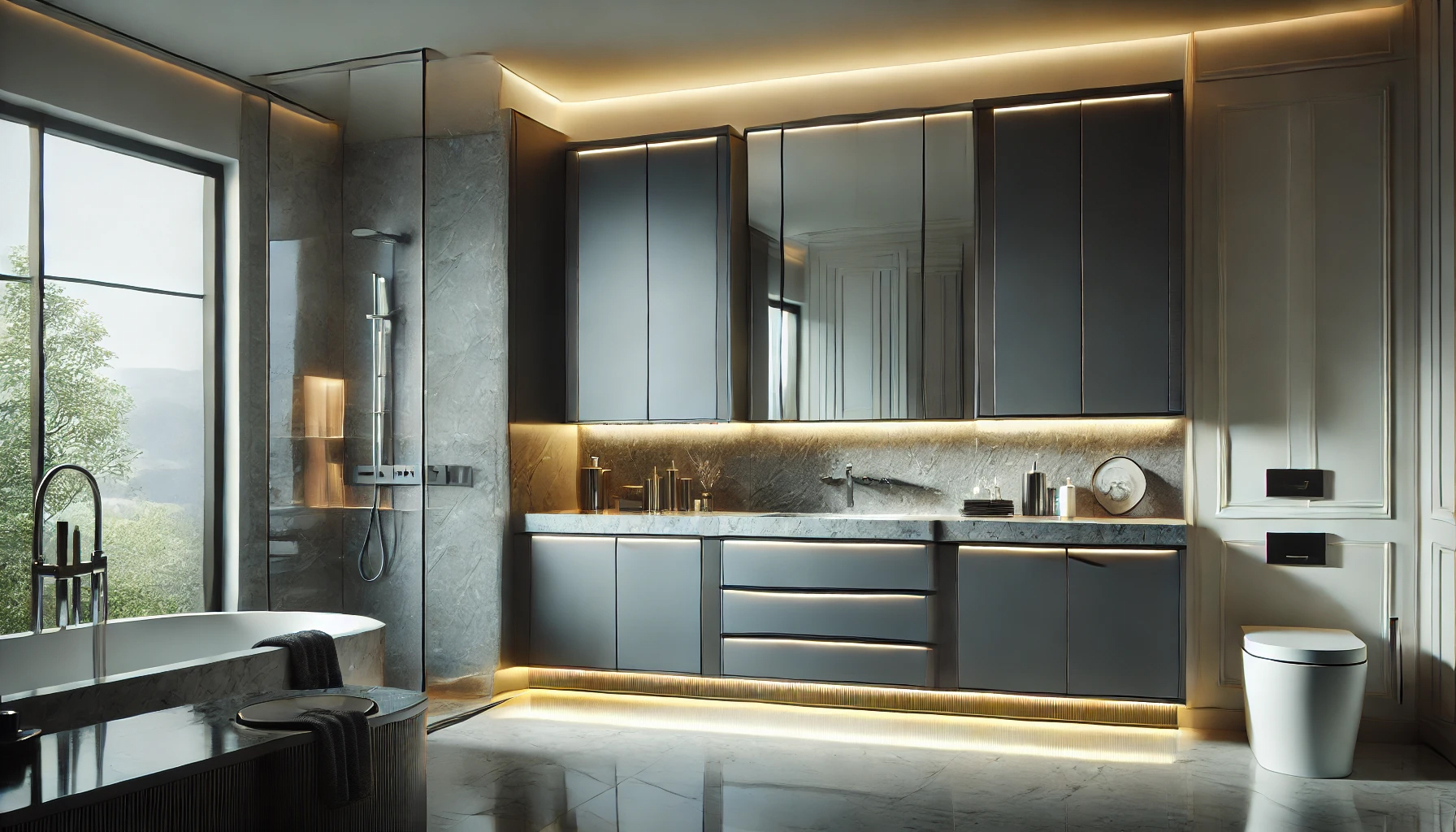
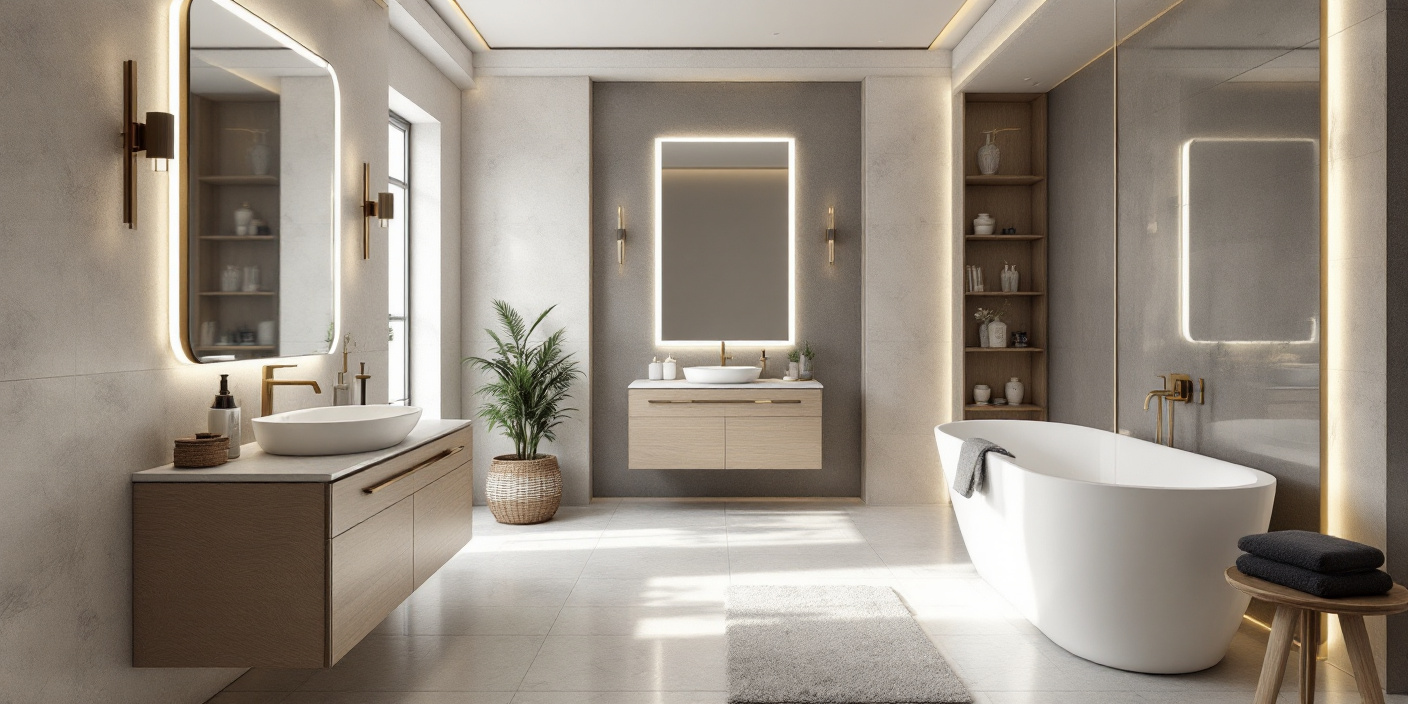
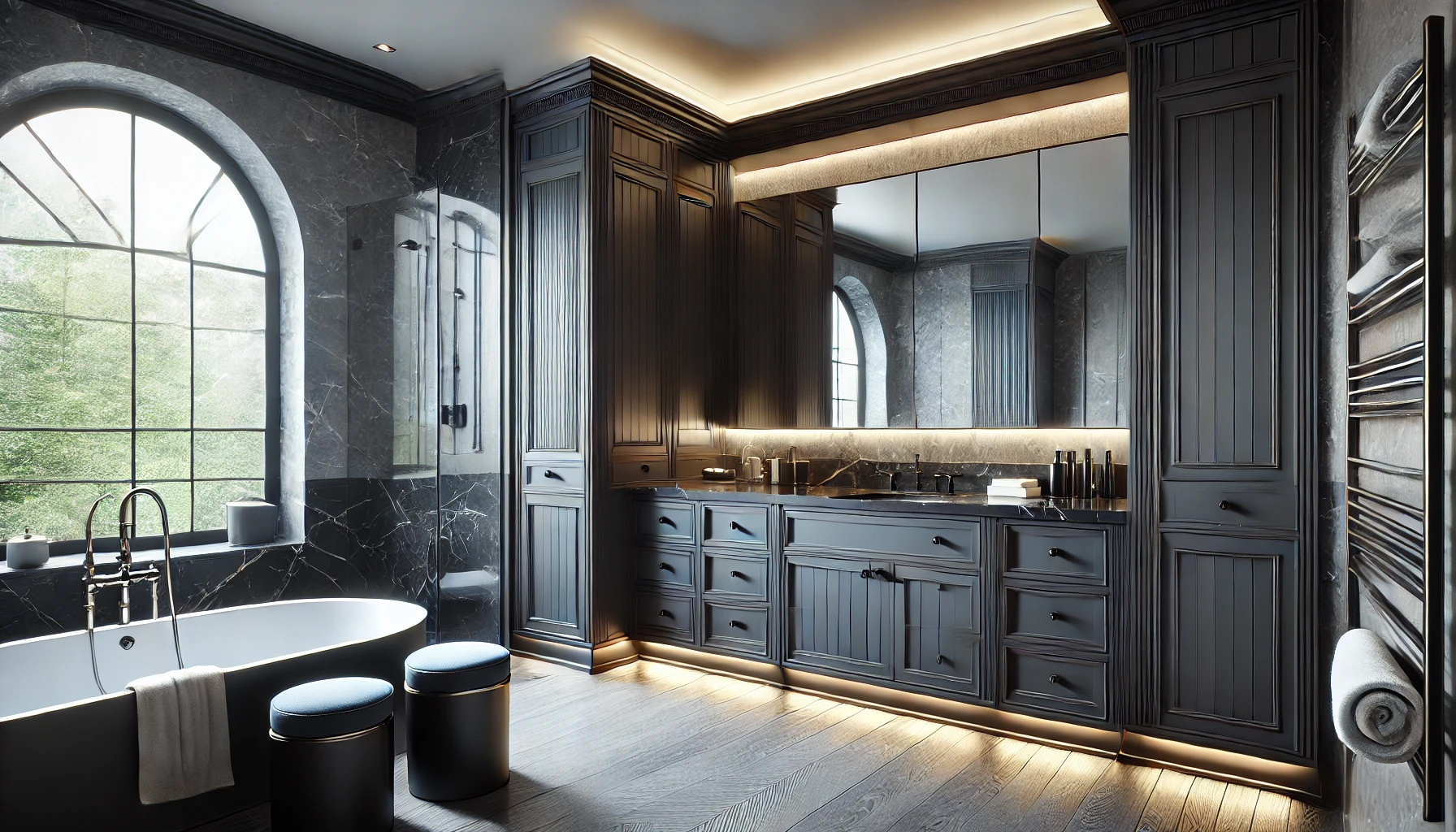
The handbasin and its surroundings are the functional heart of the bathroom. lt’s here that most activities – from making up to shaving – take place, so it follows that most equipment and accessories are necessarily grouped around the basin. Storage, lighting, a mirror and so on must all be provided.

As always, it is best to plan ahead:
don’t be tempted into buying an eyecatching item on impulse. Bathroom furniture and accessories come in a vast array of styles, colours and materials; shop around in order to assemble a personal selection.

Do you want a fitted look, with streamlined, built-in cupboards offering a maximum amount of hidden storage?
Or would you prefer to keep more of your toiletries on display, and within easy reach when needed? Would traditional or modern fittings be most in keeping with the style of your bathroom? Should the colours be plain white, dark hardwood A or perhaps bright primaries?
Bathroom furniture and accessories can be made from wood, laminate, or plastic; accessories are also available in chrome, china and porcelain.
Honey-coloured pine or dark hardwood is warm to the touch; sealed with a polyurethane varnish, wood can resist the damage inflicted by heat and steam. Laminates and plastic are both ideal for bathroom use since they are hard- wearing, easy to clean and come in bright colours and delicate shades.
Chrome accessories, which were particularly popular in the 1920s and 1930s, complement the chrome taps that are still commonly found in today’s bathrooms. And brass creates a luxurious effect. For a prettier, less masculine look, choose china or porcelain which is often decorated with delicate flowers or birds. Beware, though – china is easy to break or chip.

Posted in Bathroom feature | Tagged | Comments Off